


Video games are the only art form that simultaneously enthralls and disappoints, limited by the tech of the age they were designed in. Video games as a model for virtualized experiences are unmatched. Neither books, music nor movies can compete with video games in that regard.
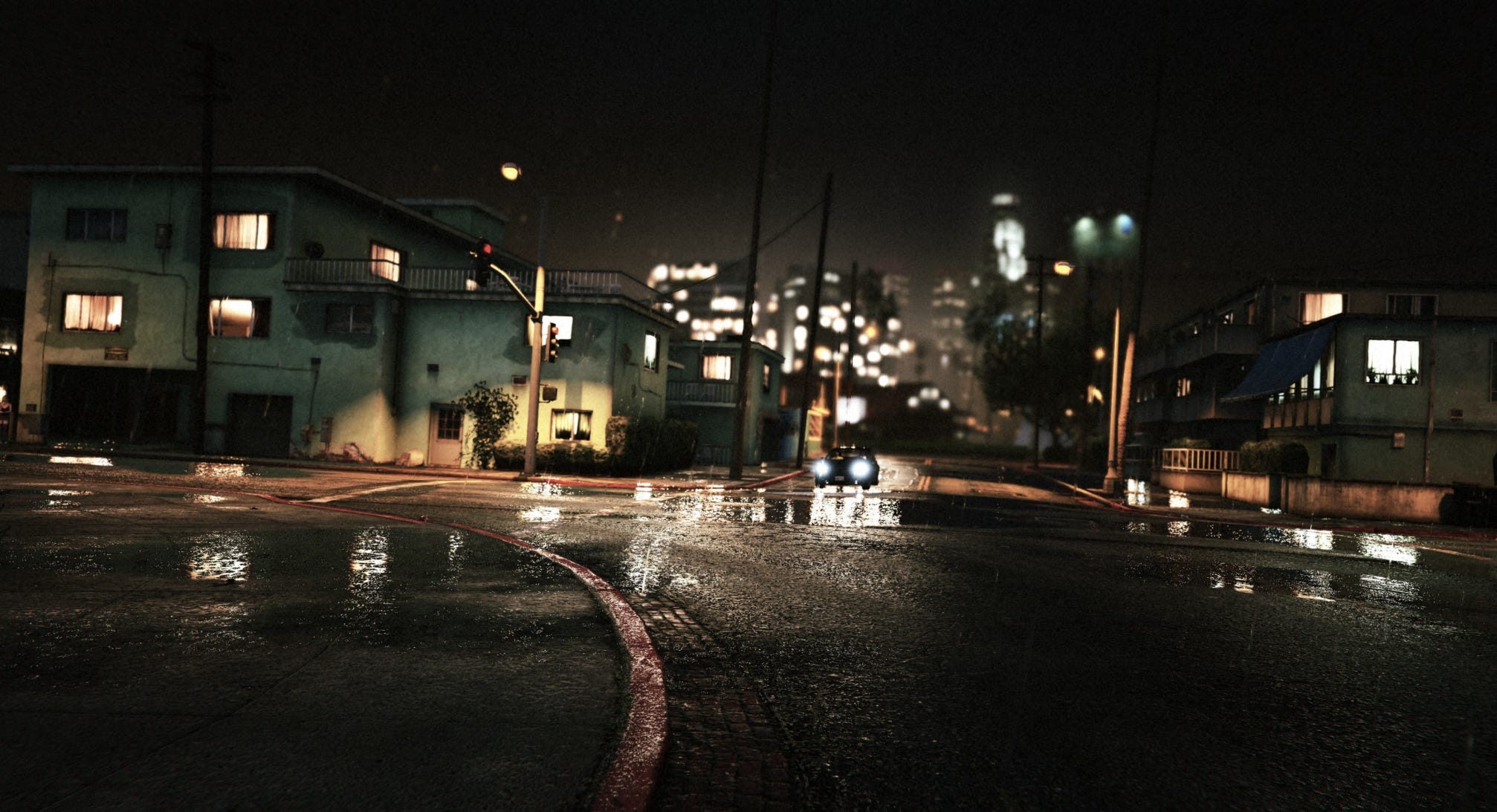
Minecraft and GTA are global phenomena as they model ingrained human behavior regarding cultivation of natural resources and stress testing civil systems. Watch a video on YouTube of GTA gameplay and it will often involve the player testing the world reactivity by committing sundry criminal acts. Even with how relatively limited the systems are, they still resemble a kind of stunted reality. We can laugh as Trevor Philips punches a cop and runs away as the cop blindly fires into a crowd—and injuring bystanders—as he tries to exact justice.
In GTA, shenanigans such as those involving speeding cars and prostitutes are well-known and notorious. We laugh at these scenes because they reflect reality unburdened by consequences. The game allows a safe detachment from moral rules because the human analogs in these games are just that: analogs with no ability to remember, castigate, shame, punish or impose their wills. There’s a safe separation of consequences. But what if we as gamers want to narrow the separation of consequences? What if we want an answer to the promise of realism in digital interactive experiences?
IMMERSION: THE FINAL FRONTIER
A word that I’ve loved for a long time is “verisimilitude,” which means the appearance of truth and reality. Another way to say this is that which provides immersion. Verisimilitude in video games is one of the qualities that has made the medium so popular, and it doesn’t require hyper-realistic graphics to achieve the goal of immersion. As a kid, playing Super Mario World or Gradius or Excitebike or Street Fighter 2, I felt like I was in another world.
Funnily enough, the more game designers chased visual realism, the less true immersion they generated. An Uncanny Valley effect took hold which actually broke immersion as the very components of the “realistic” virtual environments exposed their flaws. As games’ graphics flirted with photorealism, achieving total immersion across every conceivable metric revealed the limits of modern gaming much in the same way that relativistic mass increase stifles a spaceship’s ability to reach light speed.
In other words: The closer to reality modern games try to get, the more energy required to reach the end goal becomes increasingly difficult to amass. Character models and prop assets can offer a mind-boggling level of detail, but the lack of realistic physics and sufficient interactivity ruins the overall effect. A character like Judy Alvarez in Cyberpunk 2077 looks like someone you could bump into at a local bar, but try to talk to her about anything she hasn’t been scripted to say, and you’re reminded of the limitations of contemporary game design. The overall effect begins to disappoint.
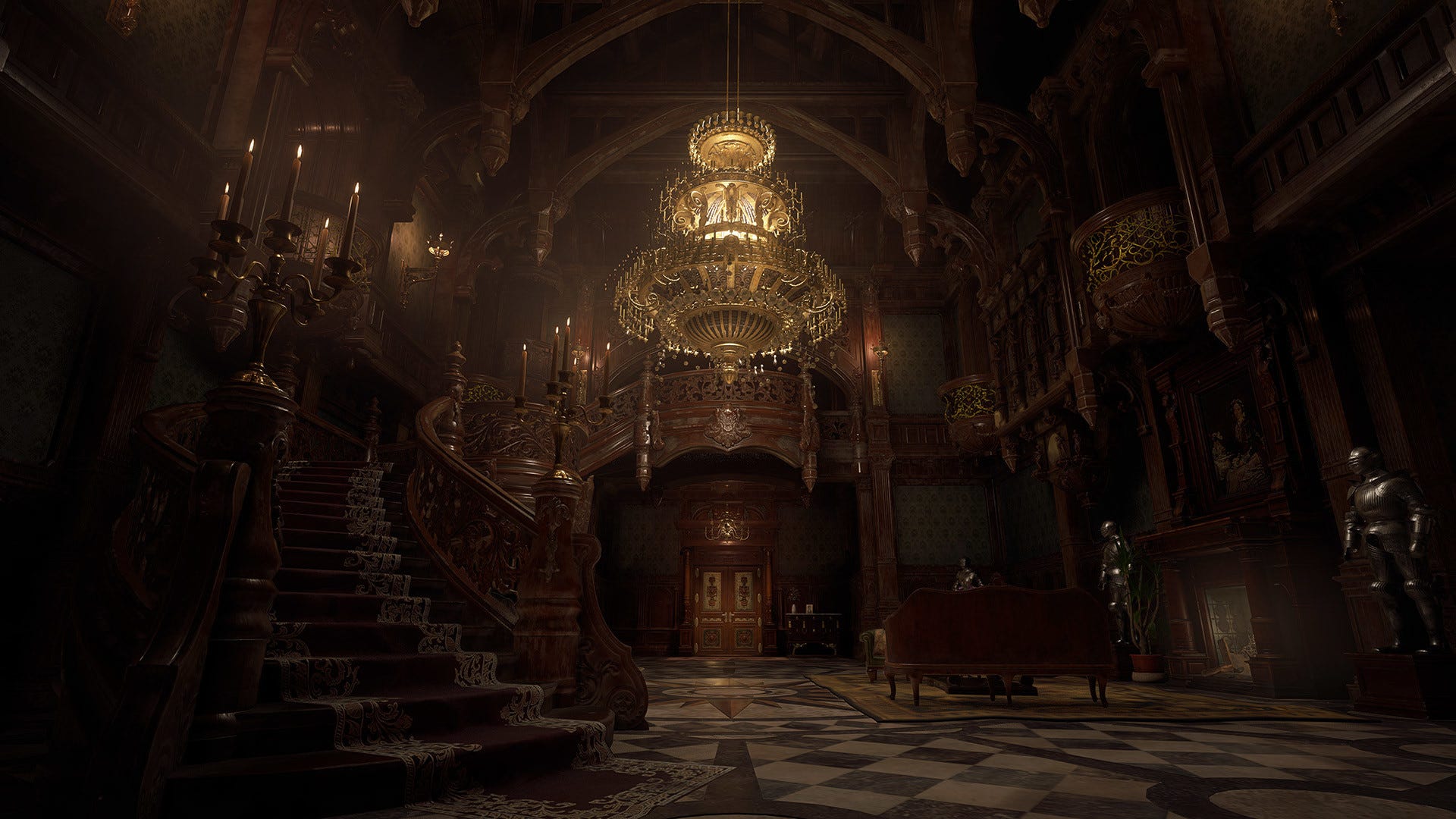
NPCs and levels become virtual museums; look and admire, but don’t touch. Walk through a room in Dimitrescu Castle in Resident Evil Village and marvel at the minute details present: a long-neglected dining table is covered in moldy scraps, fly-covered porcelain plates and neatly arranged silverware, but this photographic naturalism runs headlong into the reality of game engineering as your instinct to reach out and snatch up a fork to inspect it isn’t made available. What you’re looking at is a finely curated exhibition; the hyper-detailed surroundings are nothing more than static set dressings furnishing an experience that is largely a cat-and-mouse game between your player character and whatever monstrous ghouls that Capcom has devised.
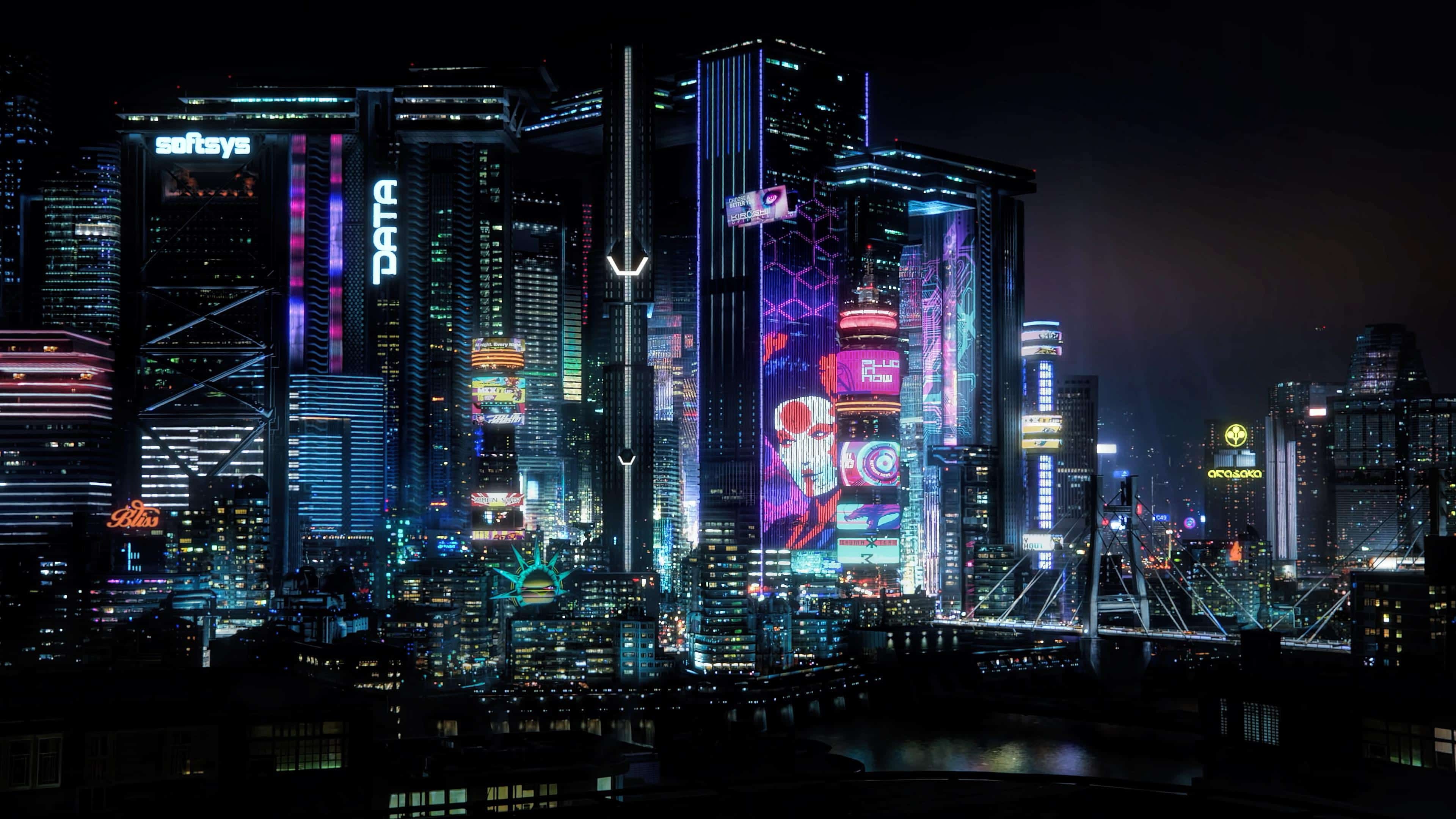
My favorite game of the last decade is Cyberpunk 2077. It’s a decadent tour of a future dystopia that is the closest I’ve truly felt to experiencing verisimilitude. However, the game is still bound by 2010s-level hardware and software and the designers carefully navigate the player around a fragile world that is actually quite limited in its immersive potential. Go to any real city, and the density of interactivity is quite high. This goes up by orders of magnitude in a location engineered for human occupation, like a supermarket or bar. You can buy anything, strike up a conversation with a random person, drive your car to most any storefront and go in. Go home and rearrange things as you like. Everything is interactive. But video games have had this dichotomous obsession with visual realism whose promise of interactive realism could never deliver. Gamers have quietly accepted this bait-and-switch, understanding the limits of current tech, but that’s changing.
GAME WORLDS FOR A NEW AGE
In one of my previous articles, I spoke on the effect that video games might have on a post-scarcity/abundance society. For readers who missed it, there’s a seeming inevitability of future-shock involving a complete dissolution of the old ways of trading labor for “money” in the shadow of looming mass automation and artificial superintelligence. Some see this as doomerism. I’m an optimist. The hope is that millions of AI-powered machines will drive the cost of goods/services to near-zero, thereby shifting human priorities to other endeavors, likely causing us to reject anti-social norms and return to honest communities again, moving into the future and back to the past simultaneously. The rest of the article hinges on this presumption. This isn’t a full endorsement, but it’s becoming more and more of a strong likelihood for civilizational trajectory. In this context, I think that games will be a way for some to fortify social cohesion in a new world. Being able to go into a sufficiently immersive virtual environment and have meaningful social interactions will change society forever.
Regarding virtual socializing, I don’t mean joining up with a crew to rob a bank like in Payday or forming a squad in Battlefield to capture a checkpoint. These are extremely simplistic, rules-based scenarios. Digital sports. Games of tag. I’m talking about the ability to create an avatar and delve into a realistic and fully interactive virtual environment, join up with a friend and hang out with AI-powered NPCs doing… nothing in particular, but the experience will effectively simulate actual reality. Going to a beach. Going for a walk through a city. Going for a joy ride. Sitting outside of a bar/tavern and watching cities that live and breathe around you. All of these scenarios would be augmented by simple chit-chat and socializing with AI NPCs whose lives are just as nuanced and complex as your own. All of this will take place in any environment of your choosing: past, present, future or entirely fantastical. I’ll delve more into this later.
Perhaps—post-abundance—games/simulations in the future will be produced not to make money, but to create social circles since we’ll have more and more free time. People might generate video games not with the intention of milking players through every conceivable conversion tactic available like microtransactions, but rather they’ll engineer experiences that will attract attention and create social bonds. MMORPGs will shift from chicken-killing, dungeon-raiding stat porn to massively immersive worlds where people create parallel social and business lives within virtual worlds.
Curious enough to indulge this interest in the now, I asked my son to take my Steam copy of Cyberpunk 2077 and mod the hell out of it to get as close to my dream RPG as possible. We looked at the suite of mods available, and while they’re enticing, they were not enough to achieve the game I wanted. So, in lieu of pursuing a modded version of 2077, let’s design a theoretical perfect immersive sim RPG that isn’t limited by current technology. Just for fun.
DESIGNING THE PERFECT IMMERSIVE SIM
Most open-world RPGs are 80% scripted goals and 20% free roam—mostly space and time for you to travel from A>B to get you to the next trigger point for the story. This is one of the things that annoyed me about The Witcher 3, an otherwise great game. The game world gave the illusion of freedom, but the vast majority of content was in scripted materials. I felt herded along as I rode my horse through yet another vast, empty forest. I want to invert that ratio to where the 80% of free roam presents endless potential for dynamic, unscripted excitement while 20% of the overall experience is in tightly curated and engineered scenarios, similar to how theme parks work. Go to Disneyland and most of the park is just wandering territory where relatively-small islands of literal on-rails experiences (Space Mountain, Pirates of the Caribbean, The Haunted Mansion) are packed into curiously furnished facades that hide the magic within.
Therefore, with that out of the way, this is what I want from this theoretical perfect immersive sim:
Drop me into a vast, multi-layered environment and allow me the freedom to create my own adventures in a world powered by immensely complex AI that will facilitate my curiosity. I don’t want to be guaranteed to have any particular interaction, only the possibility to have any potential interaction. I don’t need to be at the center of some grand conspiracy that will change the world; I just want to be some guy in a truly immersive world. I want my damn verisimilitude.
Let’s start with the setting and aesthetic. Cyberpunk is my favorite sub-genre. It always has been. It wasn’t until a few years ago that I realized that so many of my favorite movies are actually cyberpunk movies: Robocop, Blade Runner, The Matrix, Escape from New York, Demolition Man, Metropolis, Terminator 2, Alphaville, Judge Dredd(yes, the Stallone version), Hardware, Akira, Ghost in the Shell and many others. This is the subgenre that my immersive sim will be set in.
Having an open-world RPG set in a grimy, dystopian world where governments and corporations go to war using tech of unimaginable potential is a seductive theater that I’d want to live in for long chunks of time. Let’s create it.
We’ll call this theoretical RPG, Quantum Fury.
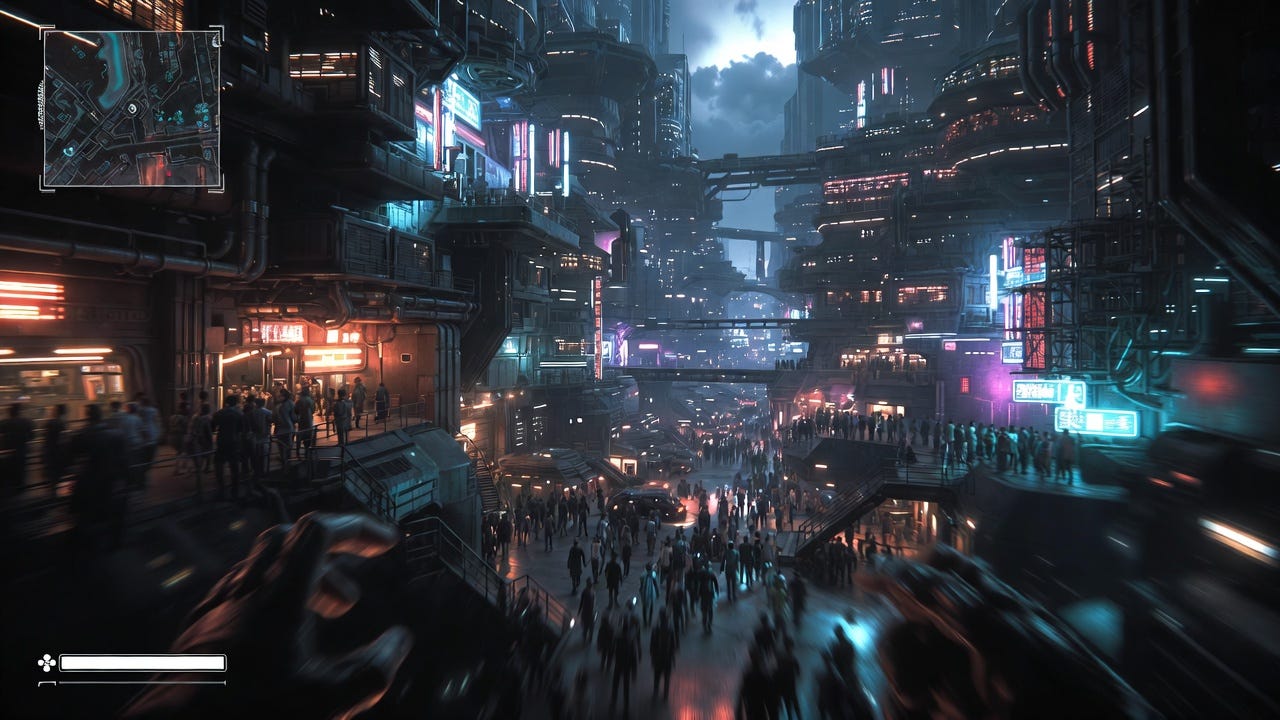
In Quantum Fury, the city in which the game takes place in would be called Desidero Bay, or DB for short. It would be a megalopolis of hard-luck stories where teeming millions are packed into sprawling patches of hyper-dense arcology towers. Beyond these towers are winding, labyrinthine networks of roads, expressways and subways. Webs of aerial vehicle traffic streak across the skies like trails of flying ants. At street level, DB is a human zoo. Dozens of languages are spoken with hundreds of dialects. It’s a future rendition of Babel reborn.
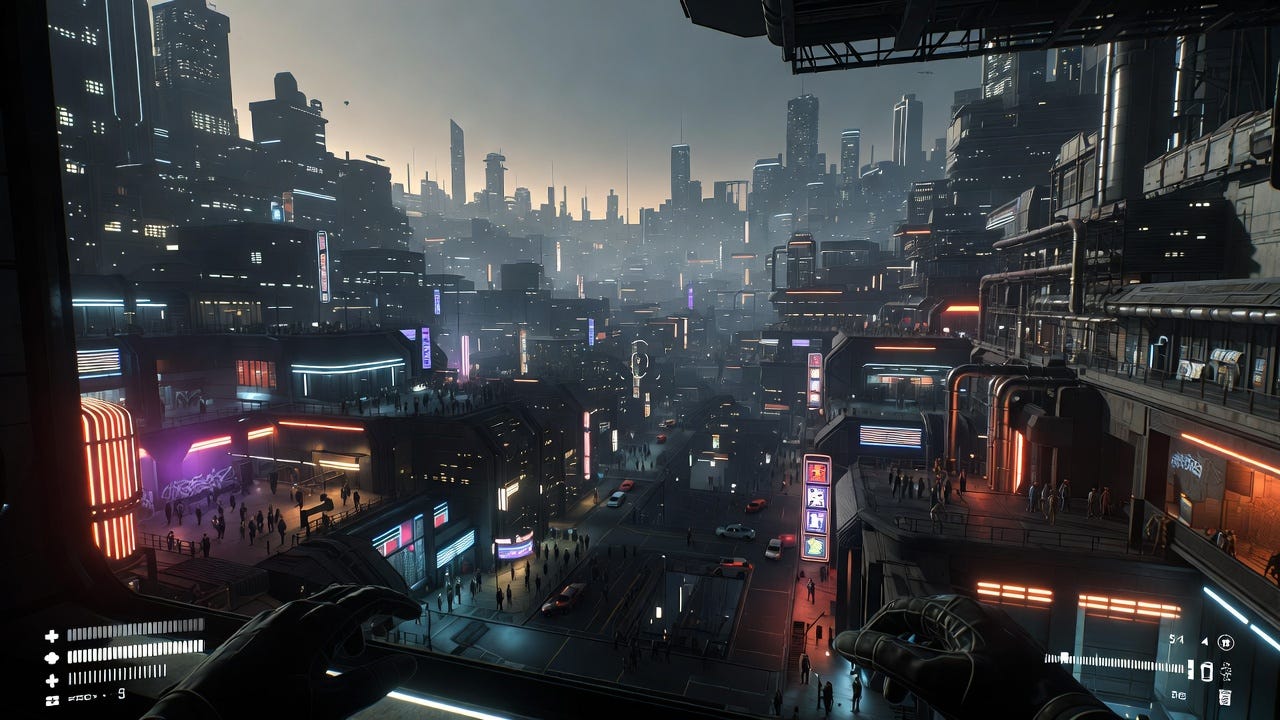
Dark alleys. Filthy streets. The low hum of automated taxis whiz by. Drizzle peppers the asphalt. Holographic ads bombard you with attentional demands and alluring offers. DB is peppered with stacks of bespoke bazaars filled with collections of odd merchandise. Imagine going into one of these little corner shops and digging into a box only to find a rare copy of an old magazine or comic book. You buy it and get the value checked on the ‘Net only to realize it’s extremely valuable. Now you have to plan on how to store it properly and possibly even put it in a safety deposit box in a bank for protection. Somehow, it’s discovered that you have it. People contact you with interest in buying it, but they could be looking to steal it. What do you do? The results are not scripted as the world and NPCs are all dictated by powerfully persistent AI systems.
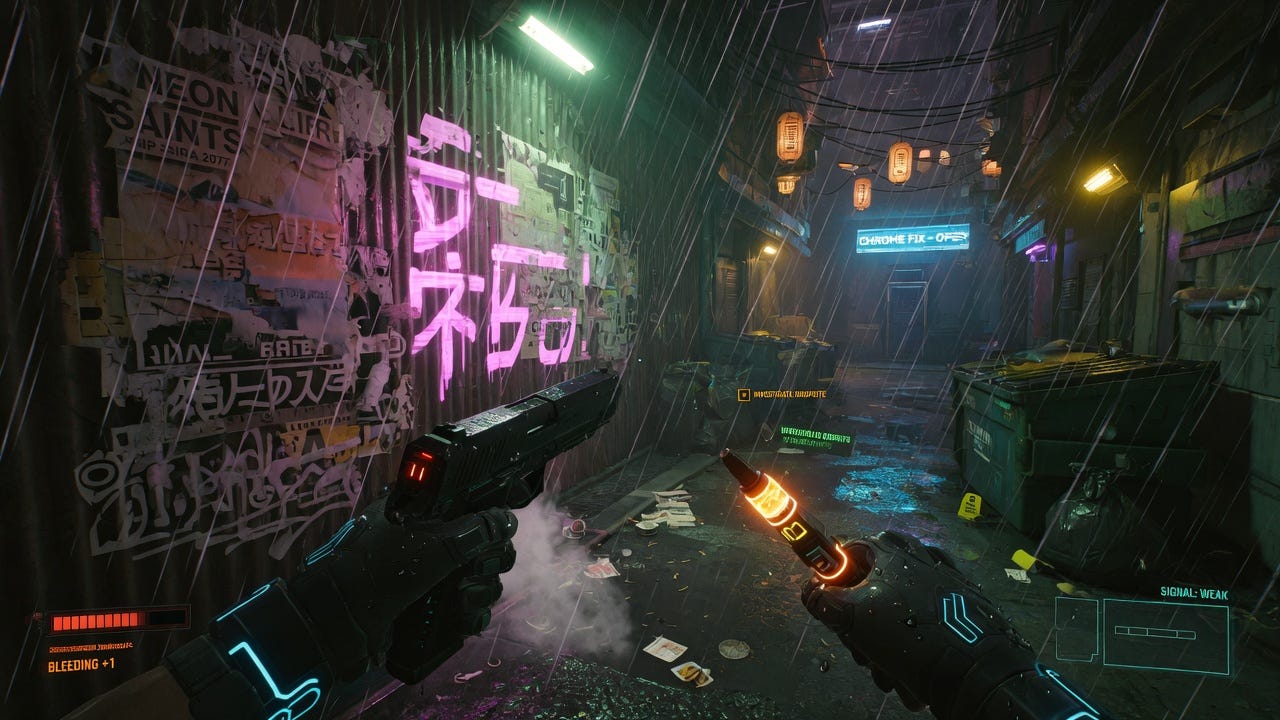
Maybe you get up one morning and decide to go to a bar and while you’re there, the bartender lets slip that a local gang came into possession of a stolen car belonging to a foreign dignitary. What to do? You could do nothing. You could steal it and keep it. You could steal it and find a way to return it and rightfully pin the blame on the gang. But what if the owner doesn’t believe you and wants you dead? Choices. The responses won’t be scripted, but people in the world will remember what you do.
And here’s the wild part—this isn’t pure sci-fi anymore. Tools like Inworld AI are already letting modders give GTA V and Skyrim NPCs persistent memory, real-time dialogue, and emotional reactions that evolve across sessions.
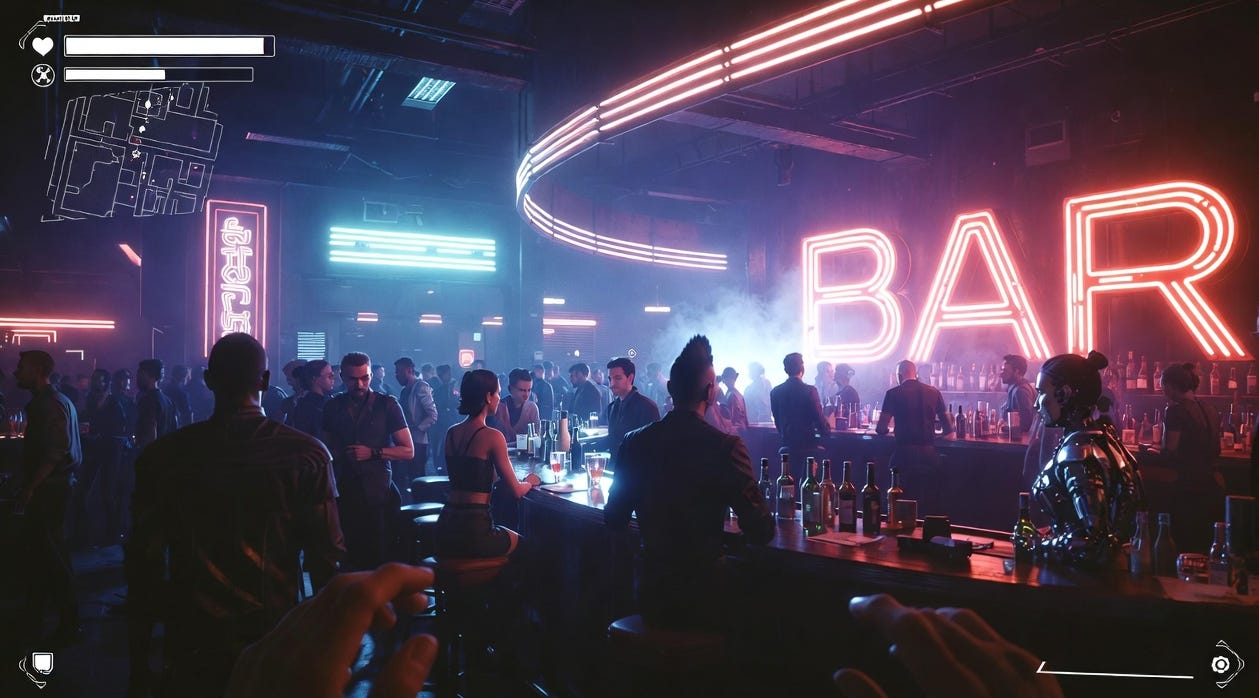
In DB, anything is possible. Maybe you go get a massage, then have a coffee at your favorite spot, then meet up with a pal or two for a VR session in a private booth. Or maybe you just lie in bed and play an AR game of Duck Hunt in your apartment. In DB, you can do anything or nothing. There is no narrative Sword of Damocles hanging over your head, but anything could happen, sometimes due to your own choices or dumb luck. Quantum Fury would allow you to enjoy an experience that offers you the world and surprises you in ways you didn’t know were possible. I can dream, can’t I?
According to Grok, we’ll have simulations that will achieve my dream of fully dynamic, digital interactive experiences by 2030. A sim like Quantum Fury will likely be in development within 5-6 years. With AI tools to rapidly accelerate production, the game could be done in 2-3 years. These games would be less about contrived mechanics that require you to learn new rules, but instead provide experiences that tap into the organic and natural way that people converse, interact and navigate complex environments. With labor losing leverage, these worlds won’t just entertain; they’ll become the new third places where friendships, romances, and even micro-economies form. I can’t wait.
In the meantime, please take a look at the pre-launch page for Mad Malitia, my cyberpunk novel which is currently in-production.
SARJ OUT