THE PROBLEM WITH PROSPERITY
As a Gen Xer, I joke with my Gen Z son that I’ll play more video games when scientists extend the human lifespan indefinitely(as well as finding a way to upload human consciousness to a variety of physical interfaces like robots) and I don’t need to work as much. And I know that as I say that, we human beings in the year 2026 are living in a very unique inflection point in history.
I’ll make it clear that I’m a tech super-optimist and I think that the curve of history will lean towards increased abundance, as it has in every capitalist, first-world nation. Having said that, I have no romantic sentiments—nor am I married to—the current paradigm where the entirety of human-centric scheduling and planning revolves around trading labor for a fungible, faith-based resource called fiat money. Based on trending tech movements, the post-industrial revolution paradigm is not long for this world.
So many seemingly disparate technologies are adapting and evolving simultaneously, and it appears that this evolution won’t be stopping anytime soon; in fact, they’re accelerating along an upturned hockey stick trajectory. People are worried about job displacement due to automation and the looming robotics revolution, increasing energy costs due to AI data centers, inflationary effects on the economy, and thus many are caught in a general malaise about the future. I think that over the last fifty years, tech has been slowly converging while we’ve been simultaneously prepared sociologically for a post-labor world.
UNSTOPPABLE CHANGE
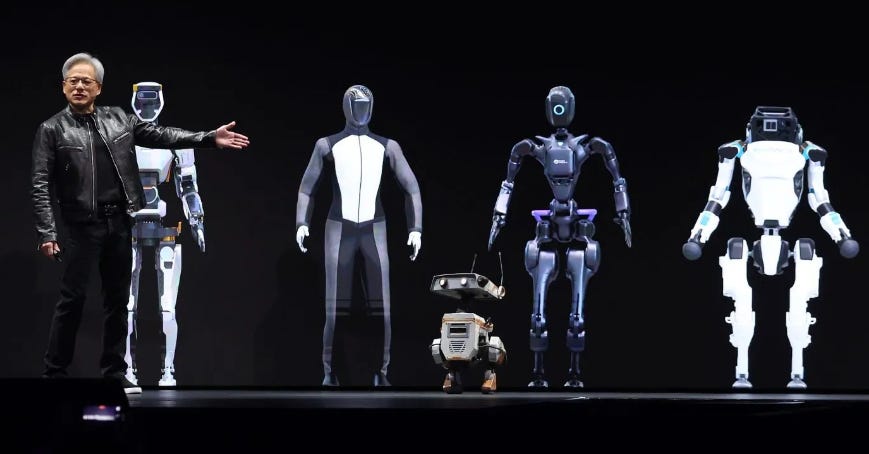
Between AI, VR, streaming compute, crypto, internet accessibility, etc, we’ve all been subjected to the largest social experiment where an alternative to the drudge-labor-for-money-to-access-basic-amenities is rapidly approaching. I was in Phoenix, AZ a few weeks ago and was surprised to see around a dozen self-driving Waymo cars tooling around. I had been in Phoenix less than a year ago and never saw one of them. Tesla is slowly discontinuing models in their commercial fleet offerings to make way for their autonomous Robotaxi future. The cost of transportation will begin to shrink. Change is coming before our eyes.
It’s becoming increasingly evident that the economy of the near-future will shift to a system where AI and robots will facilitate a move to largely equitable distribution of bio-system necessities like water, clean food and potentially even shelter and clothing. This system of residual abundance distribution will exist alongside competitive, capitalistic, open-market negotiations between free human capital. And in this abundant future—where most people will be burdened by free time—recreation, artistic creation and expression will be even more paramount.
The long-term is offering prospects of abundance that will change the paradigm of human labor-for-resources. Birth->K-12->College->Labor Force->Retirement won’t be a relevant timeline soon. But how will the general population take to this? What will happen to a human race that has—since birth—been trained to be a cog in an uncaring industrial macro-machine? What will people do when their entire schedule doesn’t orbit around the monolith of “work”? What will people do once burdened with an abundance of resources and time? Freedom can become an albatross and we’ll need to fill the void of drudge with something. Perhaps the answer has been there all along.
WEARING SHADES IN A BRIGHT FUTURE
Video games are now the preeminent form of entertainment. Gaming unseated film and TV years ago and this will not stop. No other medium allows the individual to not only interact with virtual worlds in a stratified way, but to also do so with social features that are baked into the experience. Human beings are social animals and gaming allows us to simulate every human instinct and impulse—good and arguably bad—with limited risk to body and property.
In Call of Duty, you can fight super-soldiers with next-gen military hardware while joking with your friends about that one time in college that you slipped on ice and spilled coffee on your date. The hunting parties from 10,000 B.C.—where the legitimate threat of being gored by a sabretooth tiger or stomped by a wooly mammoth—are simulated millions of times a day across the planet where teams of internationally-distributed people work together to achieve contrived tactical goals. This is a unique anthropological phenomenon that people pass off as “vidya games”.
Video games are models that reflect human instincts and desires. We live vicariously through our digital avatars. Three of the most popular games of all-time—Minecraft, Call of Duty and Grand Theft Auto—indulge our most primal desires to 1.) acquire resources, explore and build shelters; 2.) to hunt 3.) and to test social boundaries—all of which are all deeply engrained in the human animal.
For over four decades, video games have increasingly offered simulated worlds made to appear as real as possible, when in all actuality the worlds are quite rudimentary. Characters in video games are digitally sculpted, scripted and fashioned in such a way that they appear human, but like a mannequin equipped with a speaker that projects a series of pre-recorded lines, the mannequin’s ability to simulate humanity is limited.
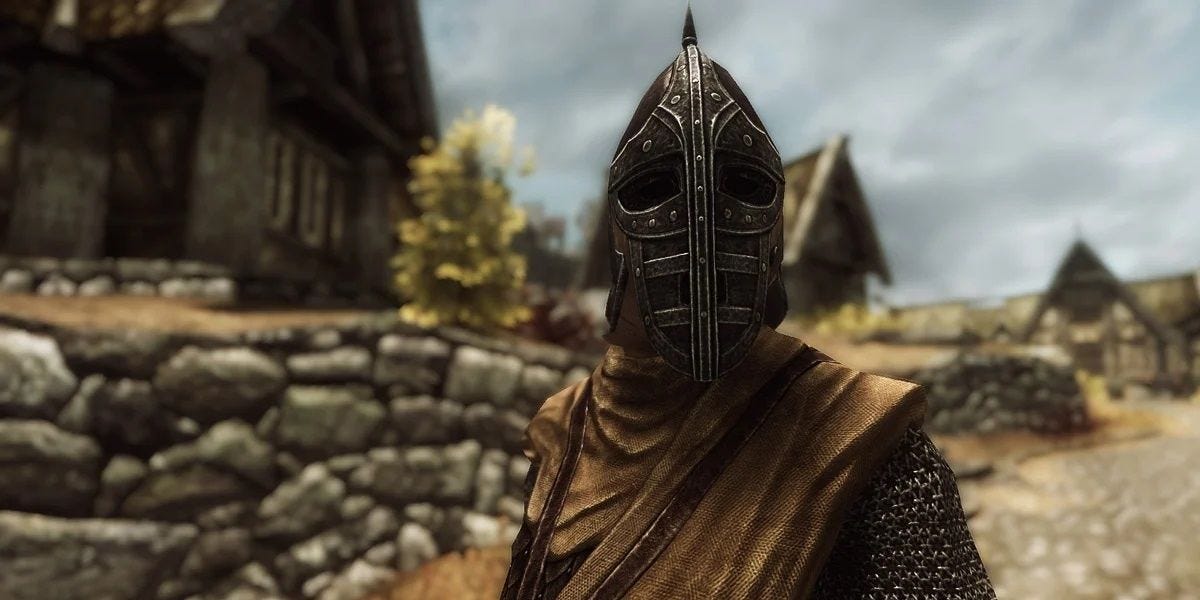
But what if it was possible for the promise of true simulation to be fully realized? What if non-player characters in games were intelligent, possessing realistic behavioral patterns, memories, quirks and lives of their own? What if you could have full-on, unscripted conversations and engagements with characters that relied on your real world ability to do so? No dialogue options to click, just verbal interactions that relied on a human-to-human ability to transmit information? That would change everything, and it looks like we’re headed towards this reality via artificial intelligence. There’s just one problem, and it’s a big one.
THE FUTURE IS POWER
True hyper-realistic worlds demand something foundational: power. Massive, cheap, endless power. The problem is that in the most delicate and important era in human history, everyone needs more power. In a time where a global robotics and AI arms race is pushing companies and nations to innovate on a daily basis, even new forms of energy capture are being floated. The old alternatives of nuclear and solar aren’t enough to accommodate a rapidly changing world.
Elon Musk floated the idea—no pun intended—of space-based AI data centers in a Sun-synchronous orbit around the Earth, which would solve two main problems of AI: 1.) massive power draw on centralized grids which drives up prices for private citizens and 2.) the additive energy cost associated with cooling said AI data centers. Space-based AI could slash compute costs 15-20x, flooding future video games with intelligent agents at negligible expense.

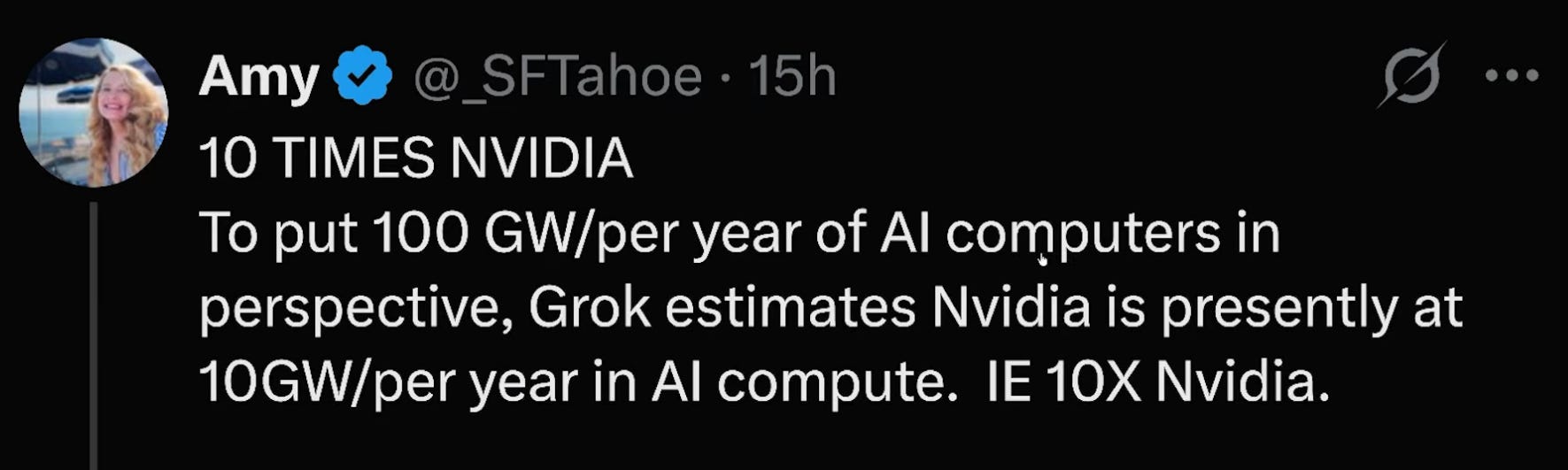
Advancing tech will push the cost of power lower and lower. The cost of AI tokens will drop and the potential intelligence of individual AI agents will skyrocket. Video games will benefit greatly from this. Why play games with stiff, pre-scripted mannequins when you can engage on realistic terms with virtual people? Subconsciously, I think we all know that this has been the goal from the beginning.
LIVING IN INFINITE VIRTUAL WORLDS
What will be the payoff? In an ideal world, abundance through AI, automation and robotics enabled by cheap energy will allow people to spend as much time as they want with family and friends and pursue their own interests. Over 3.3 billion people are identified as “gamers” globally. Once people will no longer need to work to get access to basic resources, that number will skyrocket. The number of people who will be free to develop virtual worlds with increasingly powerful tools will also increase.
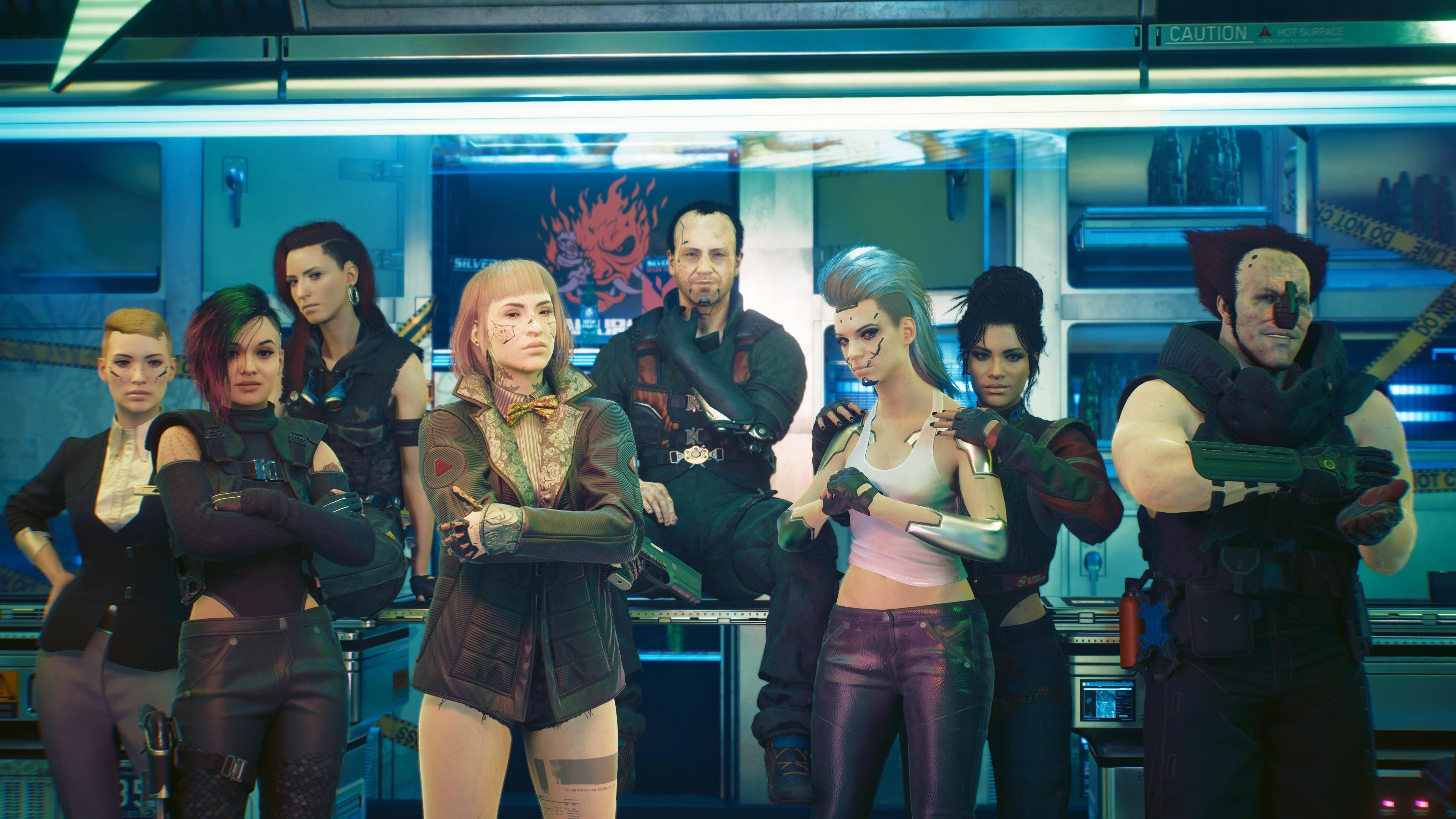
Imagine a game like Cyberpunk 2077, Elder Scrolls or Grand Theft Auto in two decades where abundance allows us the ability to spend time in these virtual worlds with virtual people so intelligent that they won’t be “NPCs”, they’ll be our friends. They’ll engage with us in the real world via phone calls and text messaging(Openclaw is doing this now) and we’ll even create lives together. Our virtual lives will become irrevocably entangled with the real world.
We’ll have to juggle personas in different simulations. In an AI-powered Elder Scrolls we’ll manage a farm with dozens of friends in nearby villages; in a future Cyberpunk game we’ll be a merc balancing love and business. In the real world, our phones—or whatever future analog will exist—will act as a convergence point to bind these experiences together and the level of immersion will be undeniable. This would’ve sounded insane a few years ago, but it’s not only possible, it’s inevitable. For me, the future is arriving incredibly fast and is blindingly bright.
The novel I’m working on right now is called Mad Malitia and takes place in the year 2147, so delving deeper into these contemporary tech concerns have served as soft research for the book. Despite everything I’ve previously catalogued regarding automation and AI, Mad Malitia will be 100% written by me. I think that the coming of the AI-powered windfall will allow people like me to do more as a creative than I ever could have before. Therefore, I am exceptionally excited about the future of tech; it could benefit us by providing increased means of survival and improving quality of life while simultaneously unlocking our human ability to want to express ourselves through art.
SARJ OUT