


BIRTHING THE PHOENIX
Western entertainment studios have been on a crusade for the past near fifteen years producing almost nothing but deconstructive anti-culture with the unstated goal of demoralizing a people. It’s the termite approach to homebuilding: Find a building with a strong foundation, chew away at the wood, spreading feces and creating colonies. Eventually, the house erodes beyond repair and collapses. Profit?
From Star Wars to Star Trek to Doctor Who to Marvel to Halo to Dungeons and Dragons, cultural thieves and political ideologues took charge of storied, fan-valued institutions and began to aim for every iceberg they could find. Any way to dissect, criticize or disassemble the foundational components was their goal and hundreds of billions in IP value has been lost across the board.
Incompetent industry plants have been given the keys to media kingdoms only for them to be driven into the ground out of sheer hubris and creative impotence. Franchises that once kept toy stores open can’t even attract enough of an audience on streaming networks; characters that used to sell millions of copies of comic books can’t sell more than tens of thousands; games that used to draw the attention of tens of millions of gamers can’t break even and end up losing money. It’s mass cultural suicide. It’s purposeful.
GATEKEEPING DOESN’T WORK
I hear fans say “We need to gatekeep our hobbies!” but the problem is that you rely on corporations who owns the intellectual properties that your hobbies are contingent on. How can you gatekeep what you don’t own?
The fact that we in the West are reliant on a small, concentrated conglomerate of global corporations to provide our entertainment is a sin. I’ve said this for many years, but I’ll say it again here: The future of entertainment is decentralization. The status quo of a dozen or so brands providing most of our fun is over.
We’re already seeing this truth being realized in the gaming industry. The titans of “AAA” over-funded, over-monetized and over-developed video games are getting thrown into a corner and bludgeoned by indie games. Small teams of 1-10 people can create games that entertain hundreds of thousands to millions on a fraction of the budget of a Call of Duty or Assassin’s Creed and even industry insiders are feeling the burn.
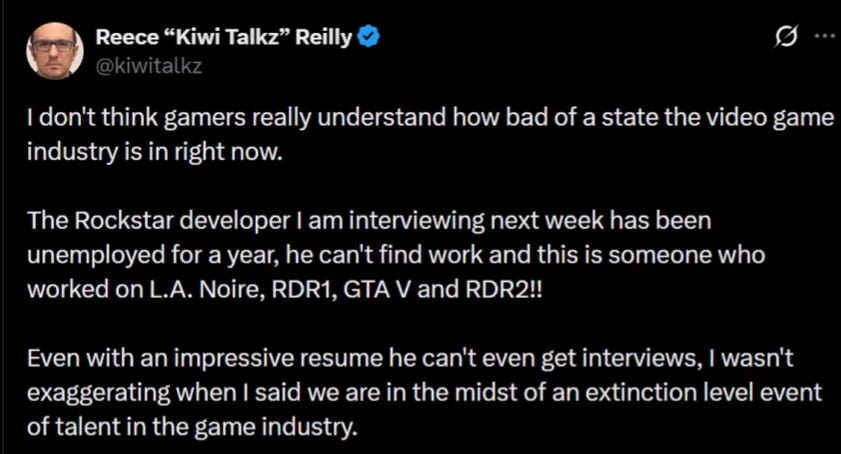
Despite the fear within the freelancer developer sphere that powers the Moloch engine of AAA corporate gaming, many indies are happily providing friction-free entertainment for the masses. The Mewgenics’ dev team is around twenty people, including freelancers, and it’s been a massive hit. Check out the SteamDB charts as of 2/20.

And on the other end, you have big money-friendly title Highguard which was funded by Chinese transmedia giant Tencent and promoted on the Game Awards. Wildlight, the developer behind Highguard, suffered massive layoffs just weeks after release and the game is on deathwatch.

Developers who are gifted big-corpo money to push faux-entertainment on BS-resistant gamers are losing money hand over fist while indie teams that operate on more agile workflows and can entertain new ideas are bathing in money and accolades.
You can’t socially engineer interest; people either like an idea or they don’t. Period. In the early 1980s, the video game industry was on the verge of collapse. The very term “video game” was anathema to investors and families after a tidal wave of sloppy, sub-standard games from Atari. Then came along this scrappy upstart named “Nintendo” who were developing video games, but knew that they had to rebrand to get their game console into homes. Their marketing strategy relied on calling their console a “Home Entertainment System” in the vaguest of descriptions. Kids ended up playing the pack-in game, Super Mario Bros., loved it and got their parents to bring the “NES” home. Video games were resuscitated and the industry is alive and well.
The appeal of Mario and Nintendo couldn’t be forced. Nintendo had to bring the quality—unlike predecessor Atari—and they did. Now, with literally tens of thousands of game developer companies globally, gamers are eating good. But if you want to be noticed, you’ve got to bring the fire. No one is guaranteed or owed success, and no amount of ideologically-driven campaigns of misinformation from “games journalists” will convince people to like a game; neither will campaigns of negative reviews dissuade people from genuinely liking something. The quality always rises and decentralization keeps an industry healthy. Concentrating the hobby of video games into one company, Atari, was near the death of it. Plurality of choice engenders competition and keeps companies honest.
(FRANCHISE) LOVE HURTS
Dungeons and Dragons has been around for half a century and has enthralled millions around the world. The realms created by those who originated the game—like its inventor, Gary Gygax—have resulted in innumerable stories created and experienced by gamers. However, the genius of Gary Gygax is no longer the engine of Dungeons and Dragons; it’s been co-opted by destroyers of culture who are obsessed with moral relativism and who hold a visceral disdain for the cultural foundations that inspired the game.
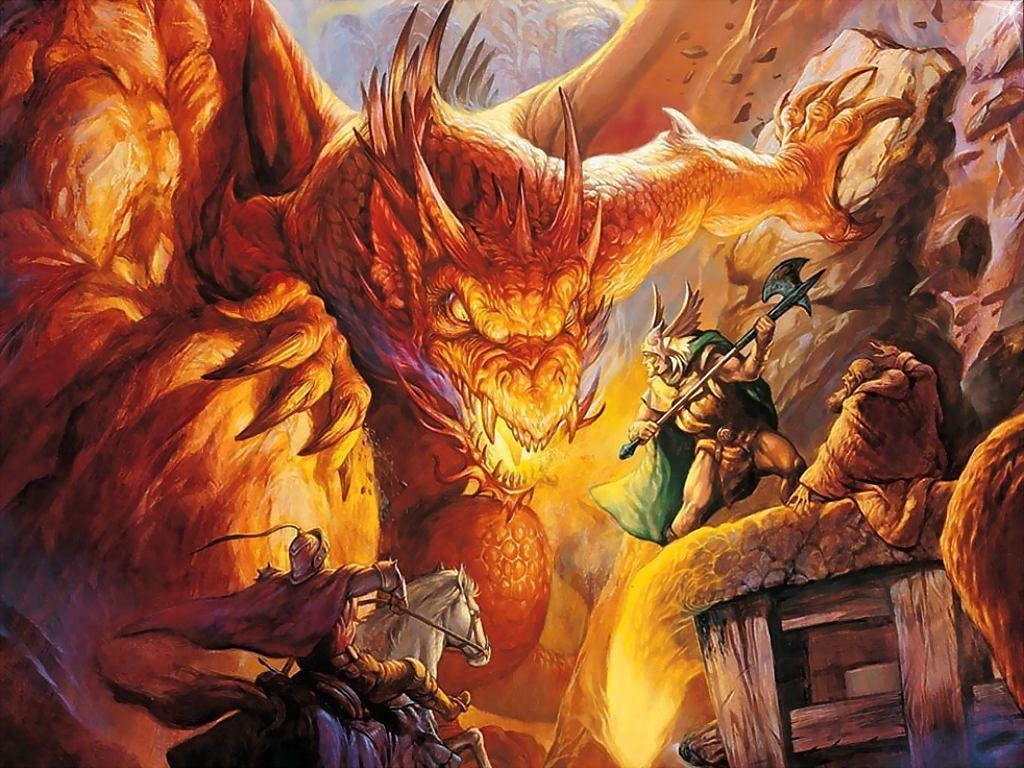
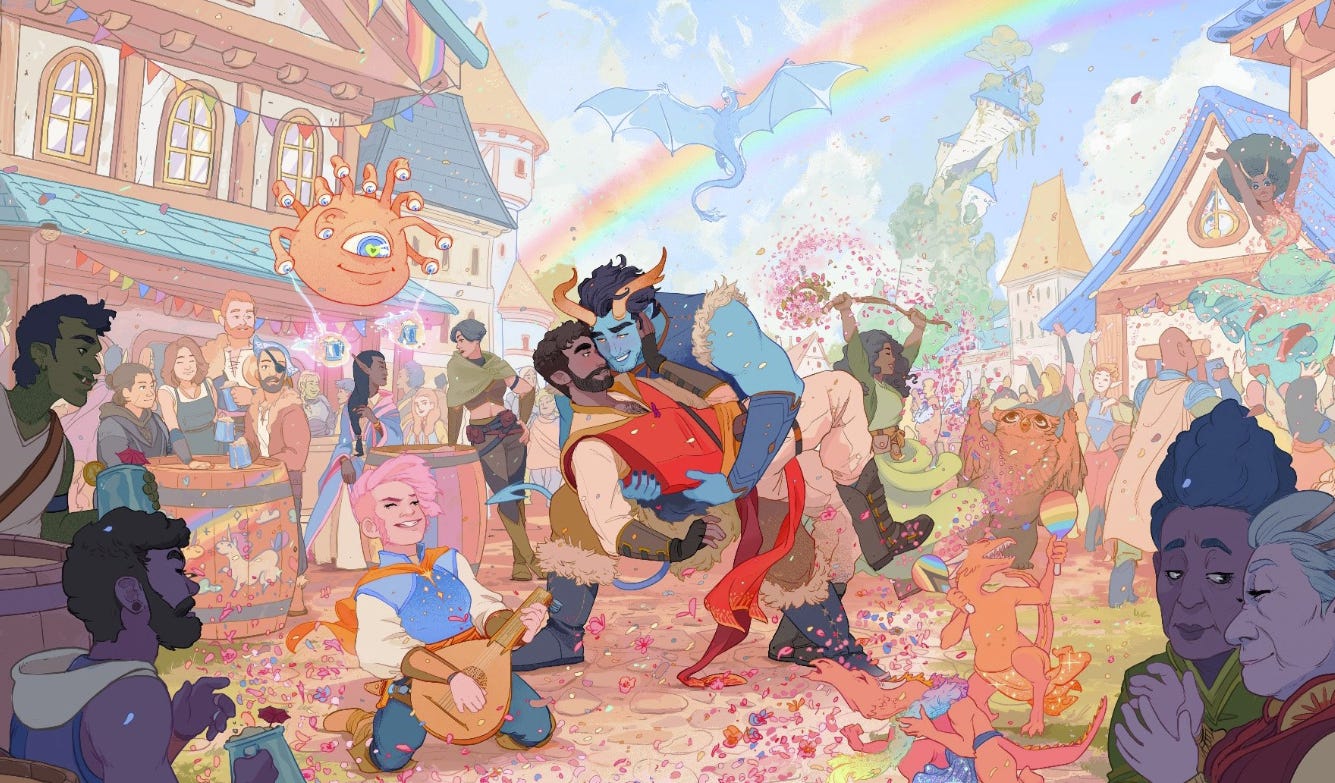
Dungeons and Dragons is a cautionary tale of what happens when something so beloved is so disrespected and strays from its roots. Thankfully, entertainment is much more accessible due to the internet, so as quickly as fantasy worlds can be captured and ruined, new ones can be created and discovered. That goes for all forms of media: books, movies, animation, comics and games. Fans will find new homes within which to congregate; they won’t settle for pale imitations of the things they used to love.
But fans can also be their own worst enemies. They invest their time, money and sentimental energy into singular franchises and when they inevitably get infiltrated and compromised, they get angry. I’ve not been angry about any franchise, company or industry getting destroyed from within because I’m not a fanatic of anything made by other people. That’s the sad realization I came to: you should only be a pure, unadulterated fan of the stuff you make yourself.
Now, before you get angry, I’ll clarify; it doesn’t mean you can’t enjoy things other people make, but it behooves us to not invest too much emotional capital into things we don’t own and can’t control. I think Warhammer is really interesting. I bought half a dozen books and read two of them. The lore is amazing. Am I afraid it will get “captured” and destroyed? No. Because there’s always another group of passionate individuals who will make something equally appealing and I’ll be happy to consider that. It’s okay to let go. What matters is that your entertainment actually entertains you.
YOU ARE THE ALTERNATIVE
If you’re an aspiring professional creative, and you want to be the one to catch the ball when the stewards of beloved franchises fumble, then you’re in good company. There’s no big secret. All you need is a product and a willing and eager audience of customers. A payment processor provides the handshake and you’re good to go.
We need more creative minds, more customer-first companies and new and fresh ideas. There’s no need to rely on mega-corps that can easily be taken over by people who refuse to do their jobs and just entertain you.
Now, if you have no interest in being a creative and just want to be on the receiving end of the entertainment, all the better! Support the independent creators that are making what you do like. We can create new communities together that don’t require the behemoth of corporate and special interest meddling. I’m proud to be making stuff for you.
SARJ OUT
