


Gothic horror is quietly oppressive. A creaking door. A long shadow. Shapes moving in fog. A moonlit night in an ancient graveyard. Silent, indifferent darkness. The genre is a mirror that reflects truth and mocks the romantic facades we’ve constructed to deify human mediocrity before God. The true abyss lies not in Hell, deep space, or the ocean’s depths—but in the human heart.
From Dracula, Frankenstein, The Wolfman, The Mummy, and Nosferatu to Bloodborne, Resident Evil, the cosmic dread of H.P. Lovecraft, the small-town nightmares of Stephen King, Hammer Films’ theatrical excesses, and the stark shadows of German Expressionism, these works represent the rich shades of Gothic horror—a unique and enduring subset of the genre.
The fear of the unknown has both restrained human progress and propelled it. For most of history, people died near where they were born. Yet those who braved the open seas—facing storms, pirates, and the void—established colonies, forged trade networks, and expanded the boundaries of human consciousness.
It was curiosity for forbidden knowledge that exiled us from Eden. That same drive fuels our technologies even as it dims the light that first brought us into being. H.P. Lovecraft understood this better than most. He peered past human-centric illusions and saw a cosmos utterly indifferent to our concerns. Yet we remain afraid of the dark for good reason. Our ancestors’ warnings were not obstacles to progress—they were survival wisdom we too often discard.
The past has always hidden eldritch horrors, and we fear it because it entombs the skeletons of our civilizational sins. Gothic horror captures our deepest terrors with quiet, romantic civility. Death does not conquer with brute force; it seduces. It implores us to give in to the chaos of our passions and within that self-summoned storm are we consumed.
There is profound pathos in these stories. The monsters that manifest within spring from very human flaws we rightly vilify. Not all are irredeemably evil, but they are driven—and often enslaved—by instincts civilized society demands we restrain.
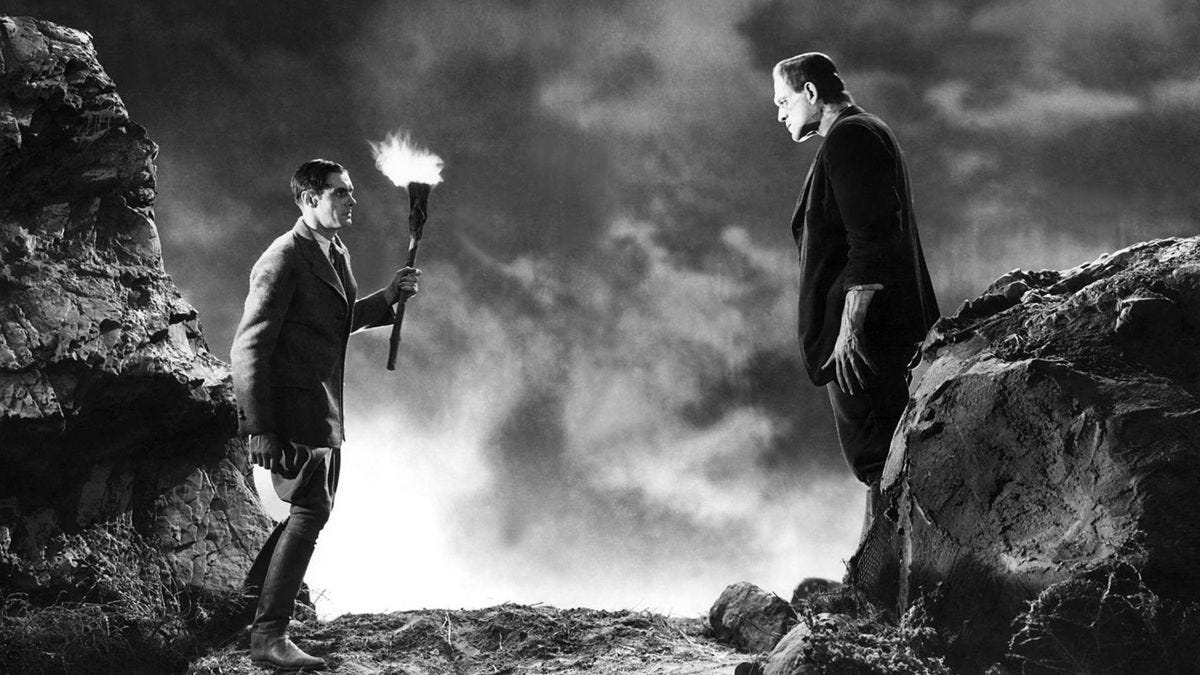
In Mary Shelley’s Frankenstein, the true horror is not the creature but Victor’s hubris. He raids graves, stitches together butchered corpses, and reanimates the dead through profane science—denying them the dignity of death. The resulting being is pitiable: immense strength paired with childlike curiosity and profound isolation. Shelley indicts man’s audacity in playing God and redefining life itself.
Bram Stoker’s Dracula is a tragic romantic who rejects death for love, only to spread vampirism’s plague. Abandoned by God, he bends nature—becoming mist, bat, rat, or wolf. His victims often welcome the bite, craving the same transcendence.
F.W. Murnau’s Nosferatu strips away the romance. Count Orlok is no urbane seducer but a withered corpse and living pestilence—Patient Zero of a rat-borne plague. Pure predatory instinct. In the end, the sun purifies him. God and nature restore order, destroying the fanged deviant.
The werewolf embodies man’s failure to master base urges. Bloodborne’s beasts literalize desire run amok, mutating humans into grotesque servants of entropy. Works like Dr. Jekyll and Mr. Hyde, The Invisible Man, and The Mummy show creatures wrestling impotence in an indifferent universe.
At its core, Gothic horror warns of the consequences when man reaches into domains reserved for God. Detach from civilization’s guardrails, and the individual fractures first, then the community, then everything. It is the rotting of the soul, devoured by its own unchecked appetites.
In Resident Evil and Bloodborne, science or forbidden blood magic shatters the world, dragging order into chaos. The grotesque truth tears through our civilized masks.
In the end, the genre subverts any illusion of humanity’s innate divinity. It holds up a mirror, forcing us to confront the consequences of unchecked ambition, greed, lust, and avarice. For, in these dreary realms, truth is the ultimate horror.
IN CLOSING
If you love gothic horror, beautiful but flawed heroines and boisterous, frenetic action, then the novella Necropolice: Bloodstorm is for you. The Kickstarter project page for the book is going live soon. The first draft of the book is nearly done and the final version will be ready for digital delivery as soon as the campaign and funding concludes.
In the book, Necropolice agent, Ursula Graves, is sent to the sleepy pastoral town of Belarad to investigate the case of a missing agent with ties to the town. While there, she discovers that little is what it seems and that she’ll have to face her own demons to solve the case and survive the night.

STRATUM MUSIC - Music To Read To
We’ve recently started a free music channel on YouTube. There will be songs and compilations inspired by our books and games. You’re more than welcome to visit the page and enjoy the free music we’ve published there.

Buy Our Books/Games
At the Stratum Press store, we’ve got several books on offer as well as other merch. You can visit the website at stratumpress.store
