


An infamous article written in 2014, in the midst of the “Gamergate” internet phenomenon, posited that “gamers are over” and that “gamers didn’t have to be the customers of the gaming industry”. It seemed so obviously confounding twelve years ago that someone would say something like this. If gamers weren’t the target audience for those who make, sell and promote games, who would be the target audience?

Little did we know, in our naïve mindsets of 2014, that this article was projecting an awareness of a new kind of anti-business model. This new model subverts the tried and true method of consensual trade between producers and consumers and instead focuses on using taxpayer money to fund propaganda. Essentially, it’s a scam: Parasites who are tourists within a culture that isn’t naturally theirs will work within the culture to make money using gaming/movies/short films/novels/whatever by promoting propaganda on behalf of someone else. It’s the subversion of real culture to produce cynical anti-culture.
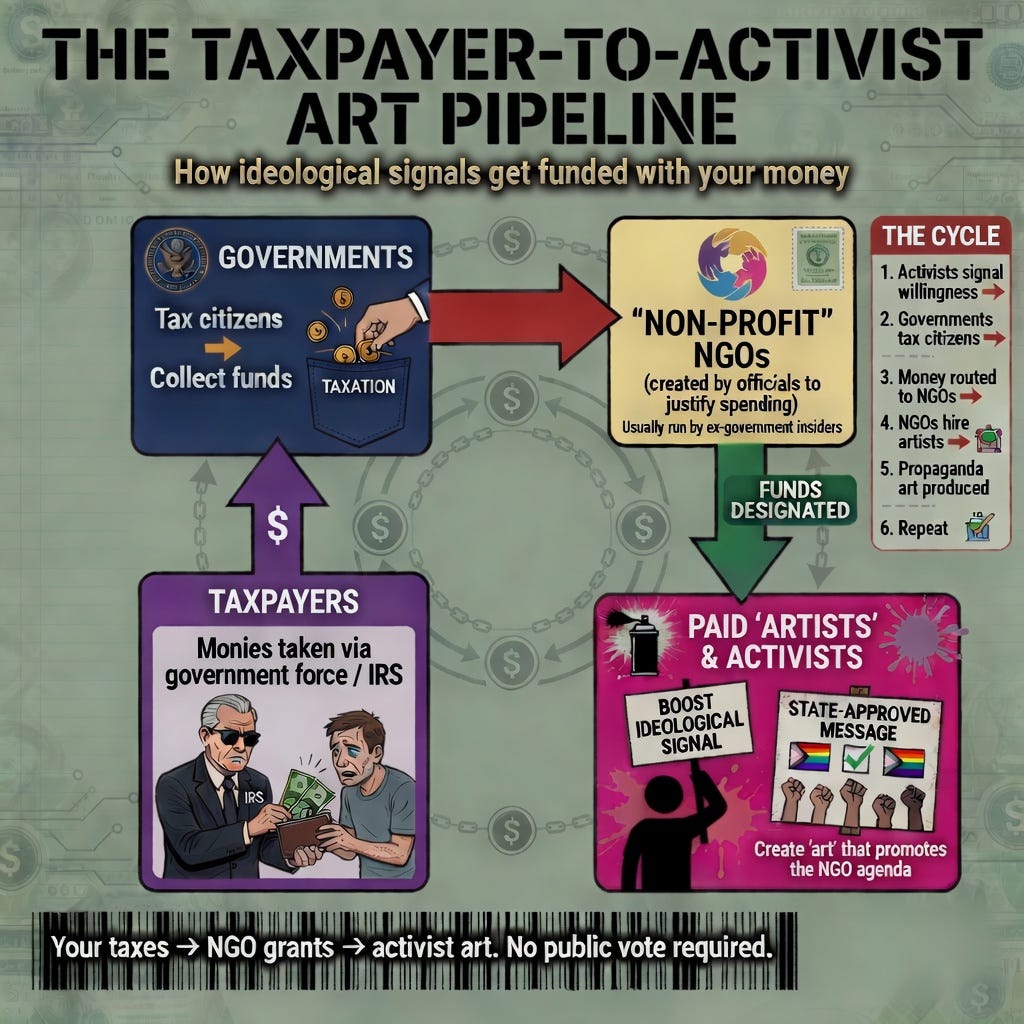
It works like this: activists signal to globalists within governments or even to “non-profit” NGOs (non-governmental organizations, usually created by government officials to justify allocation of taxpayer money) that they’re willing to boost a preferred ideological signal if only they’re given funds. Then, governments steal from their citizens via taxation to collect these funds. Some of those funds are designated to these “non-profit” NGOs who then give money to people who will create “art” that promotes whatever the NGO wants them to promote. Want to make people aware of climate crisis talking points? An NGO will commission you—with taxpayer funds—to create a game like Aphelion, which acts as a checklist of contemporary ideological talking points, all to promote human-guilt/ecological disaster porn.
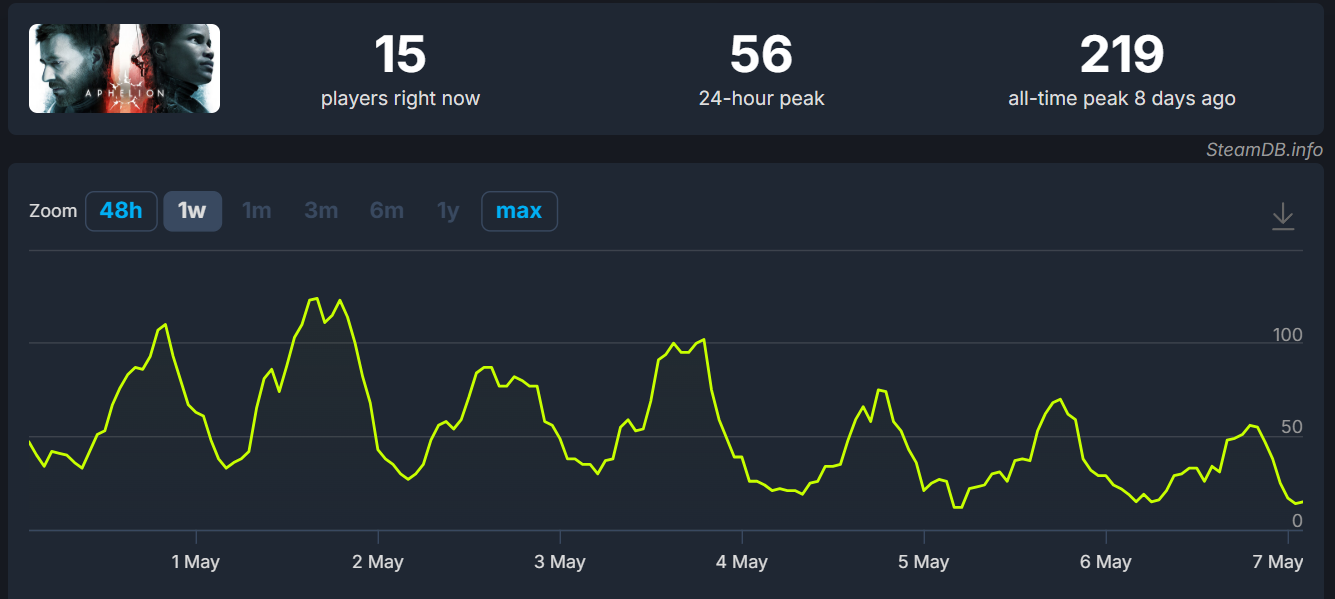
No customers actually bought or paid for Aphelion upon release. At its peak, Aphelion reached just over two hundred concurrent players globally. But that was the plan.
Gamers engaging with the publisher on consensual economic grounds by trading money for an entertainment experience wasn’t the business plan for Aphelion or the growing slate of paid propaganda. The publisher got their money from the NGO who received funding from the government who stole those funds from the citizens via taxation. It’s a simple plan. The developers got paid. The publisher got paid. And they didn’t even have to adhere to the rules of free enterprise where people exchange goods and services with free citizens in a supply and demand paradigm. No, the developers and publisher went around the system and opened themselves up to being commissioned by an unelected group of people who had access to taxpayers’ money. They took on no personal financial risk. The taxpayer-funded treasury is of nearly infinite depth and volume. Neither government officials nor NGOs care because it’s not their money.
In a healthy, ethical economy, individuals and companies must adhere to the whims and will of the consumer for a greater likelihood of profit and sustainability because there is no other customer; now there is. If you’re willing to peddle globalist or left-wing talking points, you too can get paid by propagandist NGOs working with other people’s money. Many are more than happy to sell out to achieve this.
If you’re a gamer, the boot-up screens for many games will show a litany of logos. Sometimes those logos are for software stacks that allow for certain utility within the game, like video conversion software or lip-sync tech or motion capture, etc. However, sometimes you’ll see strange logos of governmental agencies. That means that the game was at least partially subsidized by some government entity that is encouraging a message. Or as the Critical Drinker would say, “THE MESSAGE”.
If you want access to this grant, you have to promote whatever the government wants you to promote. The entire cycle is predicated on a system of theft. Nothing of value is produced. Funds are stolen to fund unwanted propaganda. That’s it.
The way commercial art used to be created was that someone thought, “Hey, I bet people would be interested in this movie/video game/novel/etc, so I’ll make it, put it on the market and promote it and I think I’ll make my money back!” Now, this relationship is dead for many. Shameless parasites are happy to accept money—stolen from taxpayers who didn’t vote for this—in order to produce unwanted activist agitprop. It’s unjust. It wouldn’t be out of the realm of possibility that these kinds of anti-business practices are part of a slow push to drive private industries to become increasingly reliant not on free individuals but on government for their subsidization. That’s a historically dangerous precedent to establish.
If you’re old enough, you remember a time where most—if not all—commercial art was made to entertain, titillate, shock and awe (positively) or educate. Sometimes it succeeded and sometimes it failed, but you rarely got the feeling that you were being insulted. Most mainstream culture now is—intentionally or not—on the intellectual level of Sesame Street. Even worse, I think it’s sensory junk food that dumbs down the masses; it reduces our public discourse to fighting ghosts rather than reaching for the stars intellectually and culturally. So much of our discourse now involves awful people wanting to bludgeon us with their awful ideas when the goal should be entertainment.
There are alternatives and value-centric entertainment still does exist. For instance: Is there a market for a science fiction story about a beautiful female cop who teams up with her gruff and masculine male partner to take down a ring of terrorists comprised of angry female humanoid robots? I think so! That’s why I’m writing a book called Mad Malitia about exactly that.
No government agency, NGO or special interest group commissioned me to write this book. I’m writing Mad Malitia on my own time and dime. I write books to entertain you and deliver genuine value. I’m a new indie author, so I’m not wasting taxpayer money to produce my books. I sink or swim based on what I produce for readers who decide freely whether or not to patronize my work. I hope that I’m able to entertain you with Mad Malitia upon release.

SARJ OUT