




In the distant past, life was harsh and brutal, but the rules were simple. Men and women knew what they were expected to do and they acted accordingly. Fantasy and horror books tapped into the dichotomy of simplicity in a brutal world of absolutes. Audiences fell in love with Robert E. Howard, Tolkien, Lord Dunsany, Edgar Rice Burroughs and Lovecraft. They fell in love with Middle Earth, Cimmeria, Pegana and the pantheon of Lovecraftian gods and monsters.
These worlds were populated with heroes whose exploits echoed Biblical stories and ones that even predated the Bible, whispered by ancient tribes and scrawled on cave walls. Conan the Barbarian cleaved anyone in half that stood in his way as he traversed the horrors of the Hyborian Age. Aragorn, Frodo, Legolas and dozens of other heroes in Middle Earth navigated a dangerous world where pure evil sought to enslave free men, hobbits, elves and dwarves. In Lovecraft’s stories, normal men saw through the veil of reality and fell victim to insanity upon laying eyes on unspeakable entities like Cthulhu.
There was a seductive nobility in fighting passionately to achieve relatable goals, even if those goals involved bloodshed and facing off against inconceivable dangers. The imagery was pure, primal fantasy: armies on horseback carrying men wielding swords traveling great distances to upend the reign of throne-hoarding despots; immortals(elves like Arwyn from Lord of the Rings) pining for the love of mortal kings (Aragorn); sieges on castles and men fighting unspeakable, ancient terrors. And all of this being done to safeguard a common sense of order that is conducive to the preservation of life and peace. These are not worlds of gray tones; they are worlds of black and white where heroes are cast in bright light and villains dyed in dark tones.
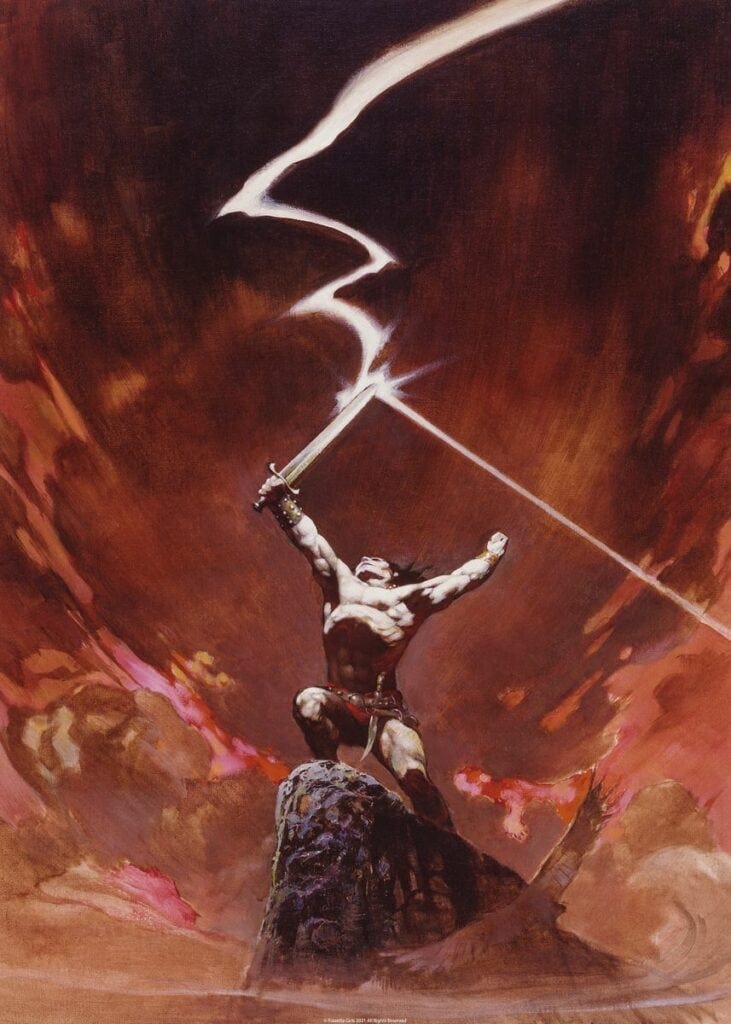
Another conceit of these stories were the depth of the chronicled lore and the implication that these stories were historical in nature. They were supplemented by maps that, by all intents and purposes, provided the means to navigate these places which made the stories even more impactful. There was some fleeting hope that one might stumble into Cimmeria if only they rode far enough or that one could reach Innsmouth if only you sailed far enough. The irony of fantasy and horror is that it’s most effective when it offers just the right amount of verisimilitude. The fantastical aspects somehow accentuate the realities of the modern world by translating them through ancient, mythological avatars.
Even now, when most of the authors of classic dark fantasy have long since passed into mortal death, modern readers still long to escape into their granular worlds of steel and sorcery. This is how the dead authors themselves somehow become one with their masterworks and fall into legend.
If you’re a fan of dark fantasy, my novella CLEAVE is coming to Kickstarter in January. You can check out some concept images here on my new Patreon page: https://www.patreon.com/posts/146865463
SARJ OUT
