VIBE SHIFT
We live in uncertain times. Disruptions in AI, automation, geopolitics, rapidly-shifting incentives in labor and education and even transportation are altering the fabric of society as a whole. In times of discord, people often turn to fiction as a means of modeling the future and escaping from the uncertainty inherent in the present.
Forty years ago, movies such as War Games, The Terminator and Blade Runner painted a picture of a future world where artificial intelligence blurred the lines of what defined “human”. These fictional tales asked us to consider a time where machines created to serve us might act in a manner that contradicts their humanistic programming or even possibly outright revolt against a new form of slavery.
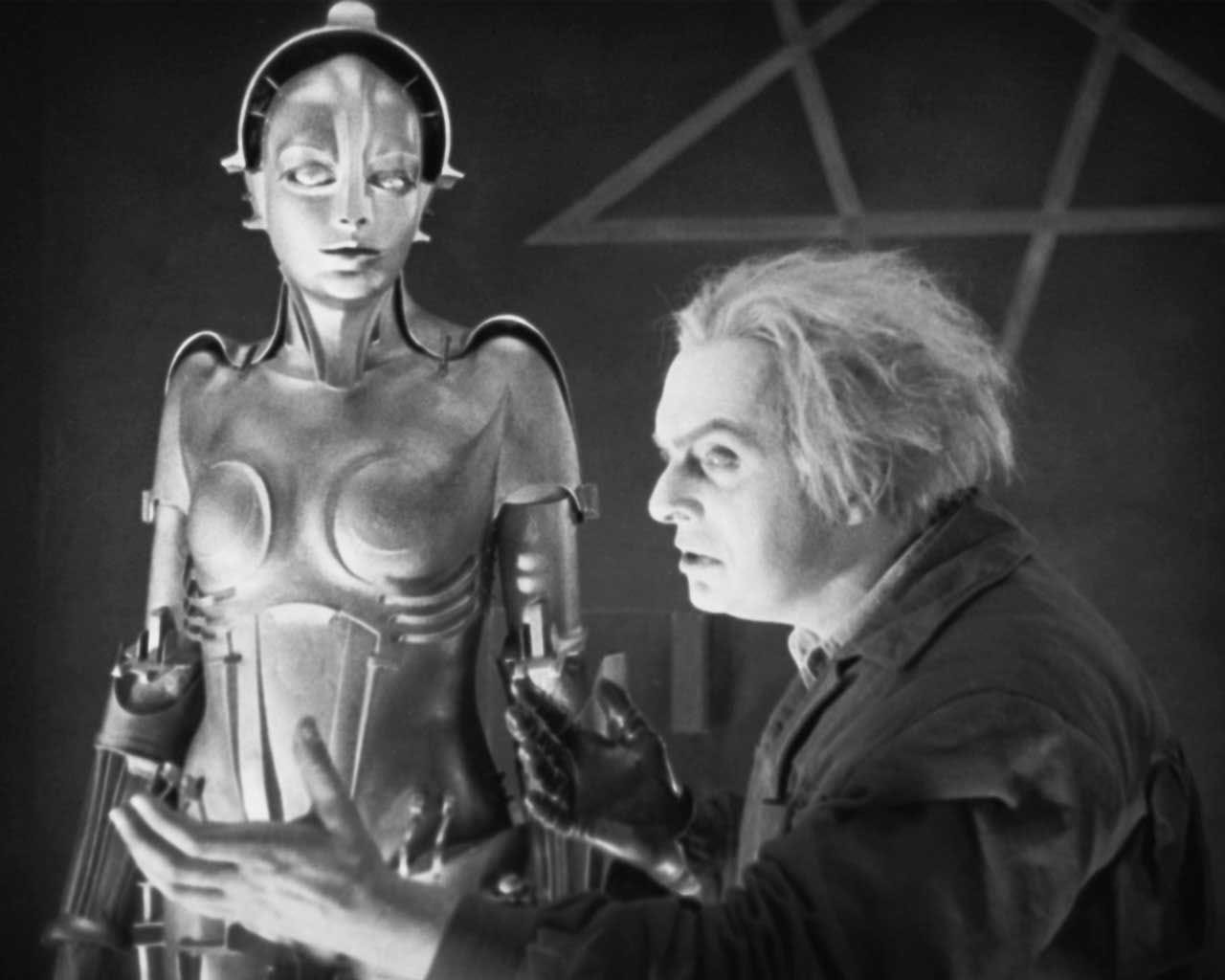
Metropolis, the expressionist masterpiece directed by German director Fritz Lang and released in 1927, chronicled the fears of automation and the loss of a people’s soul. The principal villain—the mad scientist Rotwang—builds the perfect machine, a gynoid he names Maria that he intends to use as a weapon against the system that wronged him. Maria represents hell on Earth and seduces the masses to bring down the entire system. Only by exposing Maria as a frigid, lifeless parody of womanhood is her demonic spell broken and the people’s sanity restored. This could be construed as the seductive power of technology holding sway over people until the realization that the true power is in human connection and not via cold, indifferent intermediary analogs.
In the 1980s, as home computers became ubiquitous, the sweeping fear of spreading communism and nuclear war with the Soviet Union was infused with technological skepticism. It became apparent that nuclear hot war was not only a threat by a button-press of a misanthropic despot but a rogue artificial intelligence that sees human beings as no more important than a misplaced line item in a digital ledger. Movies like the Mad Max Trilogy showed the consequences of a post-tech apocalypse with contemporary fears of travel insecurity due to volatility in gas prices being stoked.
DANGEROUS DAZE
In the 1982 film Blade Runner, Rick Deckard lives in 2019 Los Angeles, and his existence embodies the spirit of that theoretical age. He’s lonely, reserved, disconnected, cold and conflicted. He doesn’t have friends; he has associates, co-workers, acquaintances. He’s a man out of time, a bruised and broken loner who could’ve strolled into a saloon in the previous century looking for a kill or a flat-footed detective in the early twentieth looking for a dame and a hard drink. Instead, he’s trapped in 2019 looking for purpose. Purpose finds him when he’s called to track down four violent, murderous fugitives. But they’re not your typical criminals; they’re perfectly convincing synthetic humanoids called replicants, members of a new slave class who explicitly challenge the definition of what it means to be human.
The movie proceeds to plant seeds painting the picture of a dark future. In the film’s first scene, torrential rain is pelting downtown LA. Deckard runs across the street, dodging surging legions of umbrella-wielding Angelenos. Upon cutting a swath through the foot traffic, he grabs a seat at a street-side noodle shop. There’s a brief struggle through language barriers between Deckard and the Japanese chef to clumsily make his order. As Deckard digs in, a Latino detective approaches him from behind and barks at him in Esperanto, interrupting the meal. The film is very clear that in the future, shared humanity is a difficult thing to come by as we’re separated by language, culture and temperament: The human race is a petri dish on a hot stove and even a simple attempt at business could tilt towards a disagreeable conclusion.
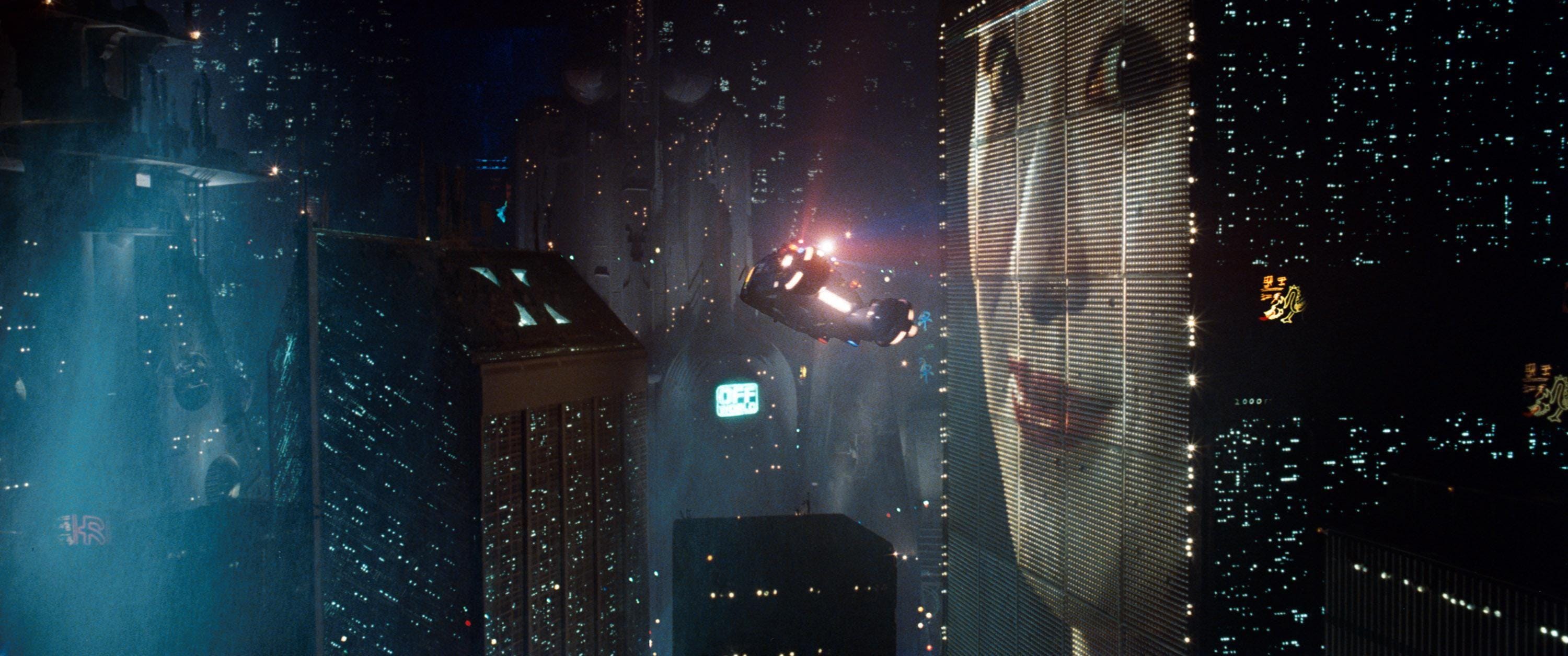
In another scene, Deckard arrives home to his apartment and makes his way to the balcony. He sets his sidearm down and, in a bout of self-loathing ennui, just stares off into the cramped, claustrophobic urban mega-sprawl. Pillars of steel and glass glint in the distance like an earthbound starfield while flying taxis whiz by. The familiar soundscape of rain and emergency sirens fills our ears as Deckard maintains his outward glare at nothing in particular. The city is indifferent to him, as is the world. There is no community. There’s just survival with a creaky facade of civilization. This is the future.
In so many of these books and films released over the entirety of the 20th century, it’s clear that there is a simmering anxiety that the future will be incomprehensibly unpredictable.
IGNORANCE WAS BLISS
Good fiction masks the tireless conflicts of human virtues against incomprehensible and unassailable circumstances. Technology is the ironic weapon that we build to optimize human processes that end up ushering in new and unforeseen complications. Social media has caused rifts in society along cultural lines and “influencers” create spheres of fake engagement to engender mindless consumerism. Death at the hands of machines isn’t necessary to destroy society. It turns out that we didn’t need killer robots to create a dystopian future. All that was necessary was to hold a mirror up to the human race and we would happily destroy ourselves.
When I was young, I remember being asked what superpower I’d like to have. I knew the superpower I absolutely didn’t want: telepathy. Ignorance is bliss and knowing the truth is a bitter pill. Social media has given humanity the ability to know what everyone is thinking as soon as a thought is formed. Discretion is one of the elements that hold society together. The “movie star” was such because of the perceived rarity of their existence. In the early days of cinema, information about actors and actresses was carefully protected, filtered and curated by producers. Little was known of these people and the only time you saw them was on the silver screen. In 2026, the concept of the movie star has faded as modern social media has exposed “celebrities” as being mostly insufferable, mediocre people.
THREADING THE NEEDLE
In 2026, art is imitating life which is imitating art. People who’ve been told for decades that AI will be the end of human civilization are living in a part of the timeline where the technology is legitimately on the verge of developing into… something. There’s a strange collective consciousness that we’re on the verge of a societal rebirth: humanity is now trapped in a chrysalis. What will emerge? A butterfly or a skeleton? For many, this is the dichotomous conflict. It’s a binary wager.
I’m an eternal optimist. I believe in humanity. Over the course of some 300,000 years (scientists currently estimate), Homo sapiens have endured unimaginable horrors, engaging in intertribal and sectarian violence, fighting and hunting animals long extinct; we’ve danced on the verge of extinction numerous times, huddling in dank caves around flickering fires just desperate to survive. And now in 2026, there are over 8 billion of us. We’re on the precipice of staggering economic, technological and social change. Artemis II recently carried human beings around the Moon farther than any had gone before. Plans are formulating to send Man back to the Moon’s surface and then to Mars, not just to visit but to colonize and establish permanent bio-spheres. Millions of cars (Teslas) worldwide are developing the ability to drive themselves via AI. The robotics industry is now an arms race which is cresting towards a massive deflationary tidal wave once millions of bots are working in global factories; this will likely fulfill futurists’ promises of abundance.
Then again, all of these advancements are not without moral questions. Questions about the right to control synthetic humanoid life to achieve human goals; questions about the right to determine parameters for AI; questions about what humans are expected to do once a theoretical “abundance singularity” is realized. Interesting questions.
I’m currently writing a cyberpunk adventure called “Mad Malitia”, about a female law enforcement officer in the year 2147 who lives in a future where the benefits and consequences of today’s discourse are realized. Think Judge Dredd meets Mad Max. A Kickstarter campaign is planned to launch at the end of May 2026 and I’d love it if you’d consider pre-ordering the book once the Kickstarter goes live.
SARJ OUT